

Table of Contents
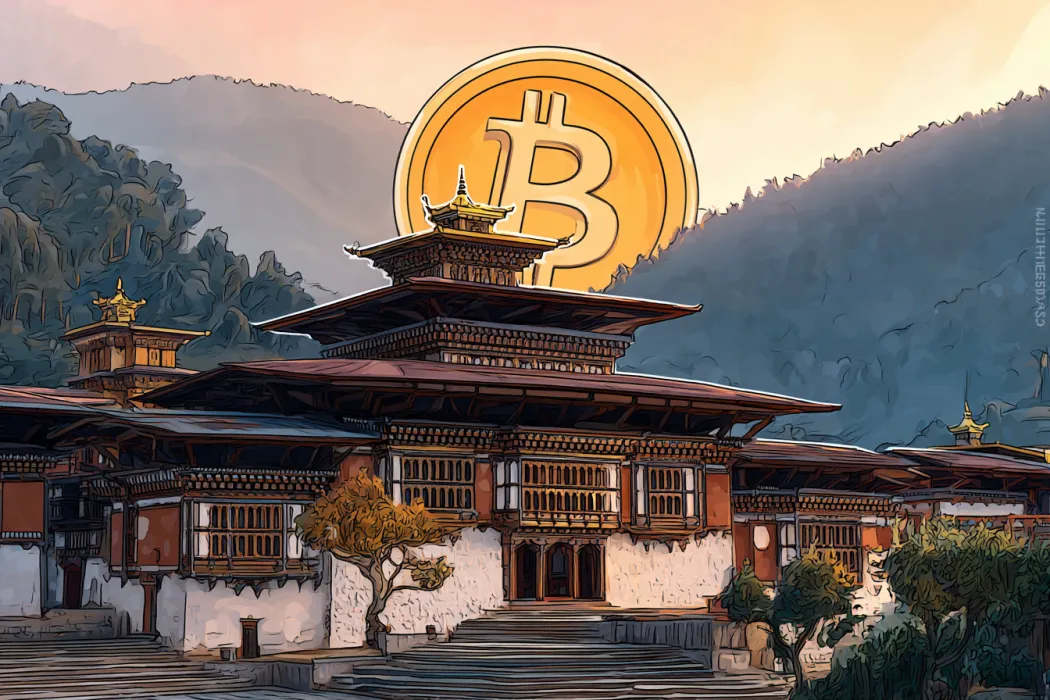
Bhutan is taking a bold step into the world of cryptocurrency, with the allocation of up to 10,000 Bitcoin (BTC), or around $1 billion, to fund its Gelephu Mindfulness City (GMC) initiative.
For a number of years, Druk Holding & Investments (DHI), the Bhutanese governmental investment entity, has been mining Bitcoin using renewable energy. The nation is now one of the world's leading holders of bitcoin, with a total of more than 11,000 BTC in reserves.
As an alternative to selling BTC, the government plans to employ approaches like collateralized lending and yield generation to sustainably support the development of the GMC. This special administrative region will attract enterprises in the finance, tourism, green energy, and technology industries.
Bhutan has integrated blockchain technology into multiple national frameworks, and it is also helping the city with its financial demands.
Visitors can now use Binance Pay, a national tourism payment system that was launched in May 2025, to pay with over a hundred different cryptocurrencies.
The launch of TER, a digital token backed by gold that uses the Solana blockchain, coincides with the implementation of a national digital identity system for citizens that is built on the blockchain.
Fundamental Plan
In line with its guiding philosophy of "Gross National Happiness" and dedication to environmental sustainability, the Gelephu program aims to increase local job possibilities, decrease youth migration, and position Bhutan as a leader in digital asset creation.
Bhutan King Jigme Khesar Namgyel Wangchuck said, “To support this policy, I am announcing today the allocation of up to 10,000 Bitcoin. This commitment is for our people, our youth, and our nation.”
The declaration lays out three fundamental concepts upon which the commitment is based.
At first, the country will continue to mine Bitcoin using its hydroelectric power resources, turning clean energy into money. Second, the cryptocurrency's earnings from mining and other sources will be put to use to better people's economic and social situations. Third, the program encourages partners from all across the world to work together on the Bitcoin Strategy, putting an emphasis on trust and a dedication to the long haul.
GMC is now reviewing growth initiatives and is expected to make a decision in the next few months, as stated in the statement.
The Kingdom's Bitcoin holdings, risk-aware yield and treasury approaches, and long-term holding plans to protect digital asset value are all being considered as possible approaches.
Himalayan Country's Love for Crypto
By developing a plan to mine Bitcoin, Bhutan has become the first sovereign nation to do so. The government increases its reserves through sustainable energy practices thanks to this program, which uses renewable energy to mine Bitcoin.
Locals can now purchase and own genuine gold thanks to a new digital token that is backed by the government and linked to the precious metal. Using public blockchain technology, Bhutan has implemented a national digital identity system that enables 800,000 residents to validate their identities and access public services.
Key Milestones & Strategy
Bhutan’s approach to Bitcoin has been less about speculation and more about statecraft: how a small, energy-rich nation converts surplus resources into long-term national capacity.
The foundation of the strategy lies in hydropower. For decades, Bhutan has relied on exporting excess electricity to neighbouring countries, a model that exposed the economy to seasonal demand and pricing constraints. Bitcoin mining offered an alternative outlet – one that could monetise surplus energy year-round while creating a sovereign digital reserve. Under the stewardship of Druk Holding & Investments (DHI), the state quietly built mining capacity, effectively turning renewable energy into a non-sovereign store of value.
As holdings accumulated, Bitcoin shifted from an experimental asset into a fiscal backstop. During periods of budgetary pressure and rising emigration, the government demonstrated a willingness to monetise a portion of its reserves. In 2023, selective BTC sales were used to fund a significant civil service wage increase, helping stabilise public sector retention and ease near-term fiscal stress. These moves underscored that Bitcoin was being treated not as a political symbol, but as a flexible treasury instrument.
That pragmatism has increasingly shaped policy. Rather than opening crypto markets broadly, Bhutan moved to ring-fence digital asset activity within defined frameworks. Regulatory changes in 2025 restricted mining and trading to registered entities tied to the Gelephu Mindfulness City, signalling a preference for controlled experimentation over retail speculation. The same logic underpins the government’s embrace of crypto payments for tourism: tightly scoped, utility-driven, and designed to improve efficiency rather than encourage trading.
The Gelephu initiative represents the next phase of this evolution. By allocating Bitcoin not for liquidation but for collateralisation, yield strategies, and long-term holding, Bhutan is attempting to shift from tactical use to structural integration. The aim is to align digital assets with national development goals – job creation, capital formation, and reduced dependence on external financing – while insulating the broader financial system from crypto volatility.
A Measured Bet on Sovereign Crypto
Bhutan’s Bitcoin strategy remains an outlier in global finance, but not an impulsive one. Unlike countries that have adopted crypto as a political statement or retail experiment, Bhutan has treated Bitcoin as infrastructure: a tool to convert energy abundance into fiscal resilience and, now, into urban and economic development.
The decision to commit up to 10,000 BTC to Gelephu Mindfulness City raises legitimate questions around risk management, yield assumptions, and exposure to price cycles. Yet it also highlights a broader recalibration underway. For Bhutan, Bitcoin is no longer just a mined asset or emergency funding source—it is being tested as a cornerstone of a sovereign balance-sheet strategy.
Whether this model proves durable will depend on execution, governance, and market conditions. But as governments worldwide grapple with energy transitions, youth migration, and capital constraints, Bhutan’s experiment is likely to be watched closely—not for its scale, but for what it suggests about how digital assets might be embedded into state economic planning rather than sit at its fringes.
Elsewhere
 Blockhead
 Blockhead
 Blockhead
Podcast
Decentralization and Privacy: Insights from TEN Protocol's Cais Manai
In this episode of Blockcast, host Takatoshi Shibayama sits down with Cais Manai, co-founder of TEN Protocol, to delve into the intricacies of blockchain privacy and decentralization. Cais shares his journey from discovering Bitcoin in 2012 to co-founding TEN Protocol, a project focused on integrating privacy into Ethereum's Layer 2 solutions.
Tune in at blockcast.blockhead.co or on Spotify, Apple, Amazon Music, or any major podcast platform.

Blockhead is a media partner for Consensus Hong Kong 2026. Readers can save 20% on tickets using exclusive code BLOCKDESK at this link.