

Table of Contents
In a strategic move to accelerate its blockchain ambitions, investment bank and asset manager JP Morgan has rebranded its Ethereum-based blockchain network Onyx to "Kinexys by JP Morgan."
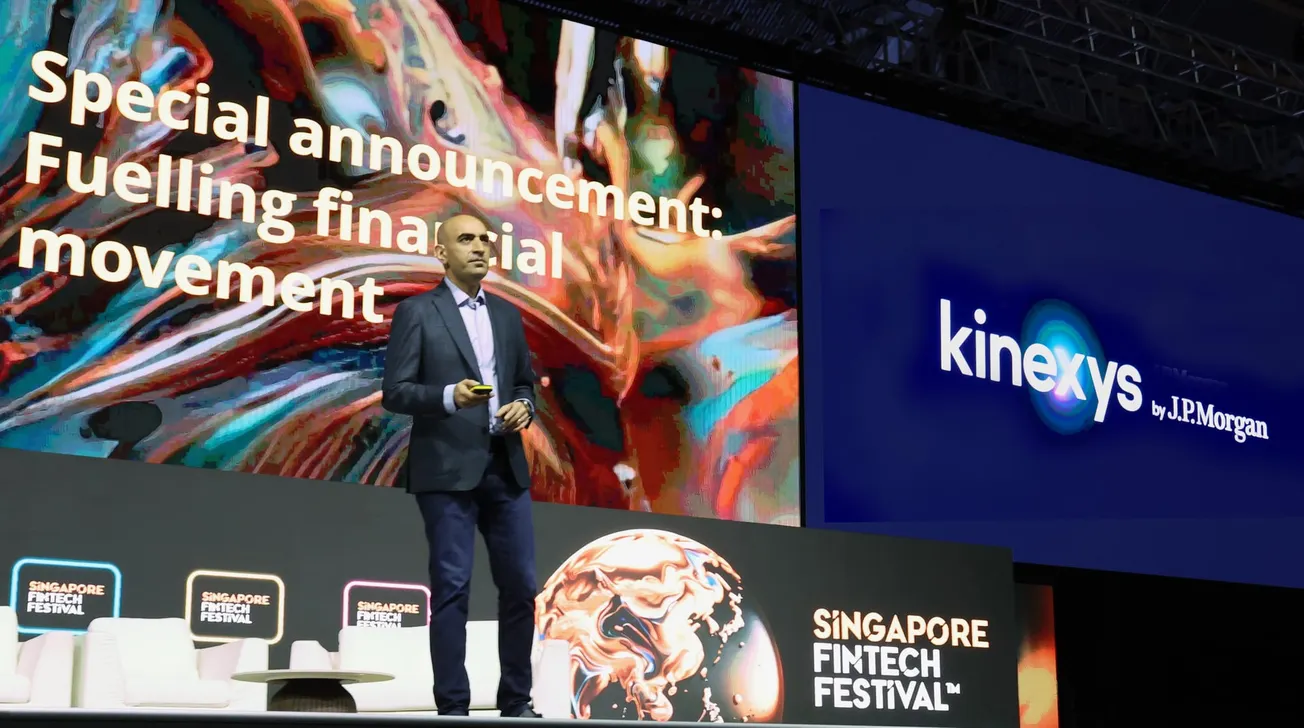
Kinexys CEO Umar Farooq announced the shift at the Singapore Fintech Festival, which kicked off on Wednesday. As part of this rebrand, all JP Morgan blockchain units covering information, money, and assets will adopt the Kinexys name.
Since its launch, Onyx, now Kinexys, has seen impressive growth, processing over $1.5 trillion in transaction volume with an average of $2 billion daily, marking it as one of the largest blockchain-based wholesale payment systems globally, according to the firm.
Over the past year, transaction volume grew tenfold, driven by cross-border payment capabilities that allow funds to move seamlessly across global markets, even outside traditional banking hours.
JP Morgan also said that Kinexys is preparing to add foreign exchange (FX) capabilities to its digital payments platform and recently launched a proof-of-concept (POC) in collaboration with Kinexys Labs.
This POC demonstrates robust on-chain privacy, identity features, and composability—pioneering advancements that aim to tackle industry-wide challenges and set a high bar for blockchain applications in finance, JP Morgan said.