

Table of Contents
Ether.fi will cut its last structural tie to EigenLayer by the end of this quarter, completing its exit from the restaking business it was built on. The protocol's documentation states that less than 1% of its assets remained restaked as of August and that its EigenPod withdrawal credentials are due to be removed by the fourth quarter of 2026.
In August, ether.fi removed restaking from weETH, its widely used DeFi collateral token, which now functions as a standard liquid staking token. Users who still want restaking exposure have to opt into a separate product built on Symbiotic, a rival restaking platform.
"There were no meaningful yield opportunities in restaking and there was some perceived risk from stakers, so we decided it made sense to exit," chief executive Mike Silagadze told CoinDesk.
The numbers behind that decision are stark. According to DefiLlama data cited by CoinDesk, the restaking category held $10.02 billion on Sept. 8 but generated only $99,977 in fees over the previous week. Liquid staking, on $51.87 billion, generated $27.35 million, meaning ordinary staking earns roughly 53 times more per dollar secured. The services renting security from EigenLayer never paid enough to fund the second layer of yield restaking promised.
The rest of the sector has fared worse. Renzo, Kelp, Swell, Puffer Finance and Bedrock, the five largest remaining liquid restaking tokens, made a combined $953,350 in gross profit in the second quarter of 2026, down from $2.18 million three quarters earlier, CoinDesk reported. Puffer, which raised $23 million, made $21,590 in the quarter.
Several developments removed what incentive remained. Points programmes that subsidised deposits wound down through 2025, and EigenLayer activated slashing in April 2025, attaching a real penalty to restaking without adding yield to compensate. In April this year, an attacker exploited Kelp's cross-chain bridge to mint about $293 million of unbacked rsETH and borrow real ether against it on Aave, exposing the extra risk carried by the token wrappers that sit on top of restaking.
Ether.fi's answer has been to rebuild itself as a crypto neobank, with a card that lets users spend against their holdings, a borrowing market and a set of vaults. Card fees rose from 17% of monthly revenue in January to 46% in July. "Neobank revenue has fully replaced the revenue lost from restaking and lower ETH price," Silagadze said, adding that ether.fi was on track to grow its revenue run rate by about 38% this year.
DefiLlama's figures are less flattering. CoinDesk found ether.fi's gross profit fell 47% from $18.71 million in the third quarter of 2025 to $9.99 million in the second quarter of 2026, and that restaking was still its second most profitable line, at $2.87 million, when it decided to leave. Ether.fi has not published the basis for its 38% figure.
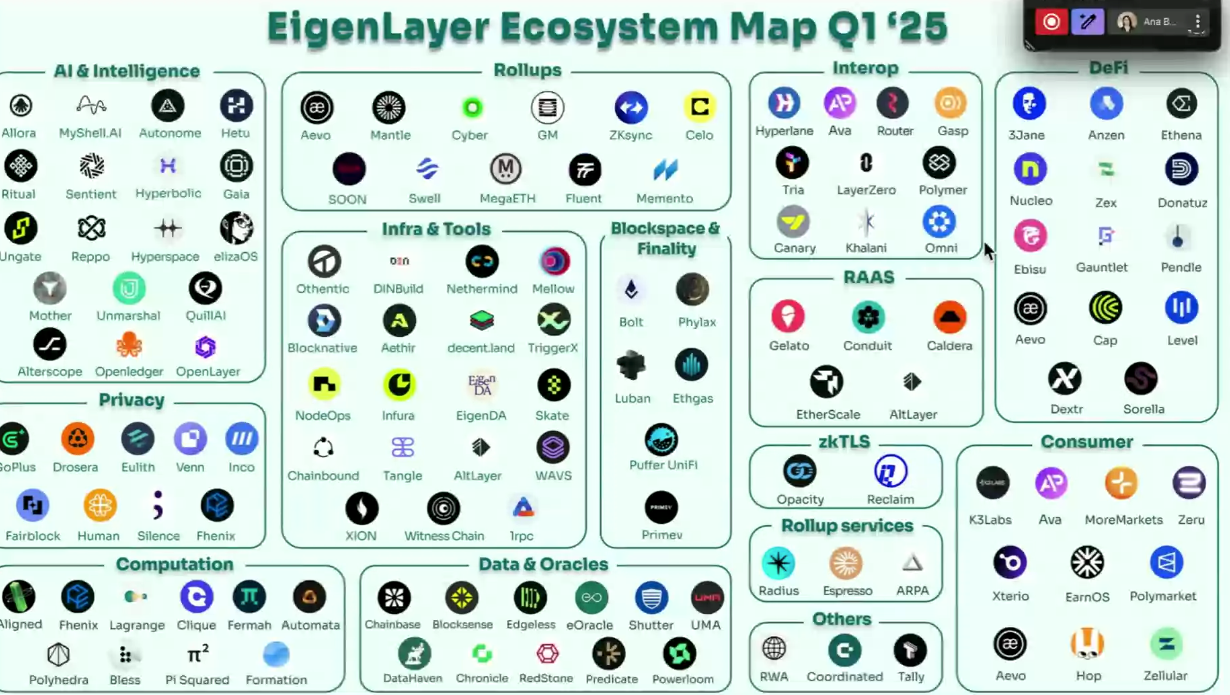
EigenLayer itself has rebranded as EigenCloud and now markets verifiable computing, with restaked collateral as the layer underneath. Its holdings stand at $5.10 billion, down from $22.06 billion in August 2025.