
Table of Contents
Bitcoin fell to around $61,688 on July 9, down 2.04% over 24 hours, as US military strikes against Iranian targets in the Strait of Hormuz triggered a broad risk-off move across financial markets. The attack was a response to Iranian actions against non-military vessels in the strategic shipping corridor, which handles roughly a fifth of global oil trade.
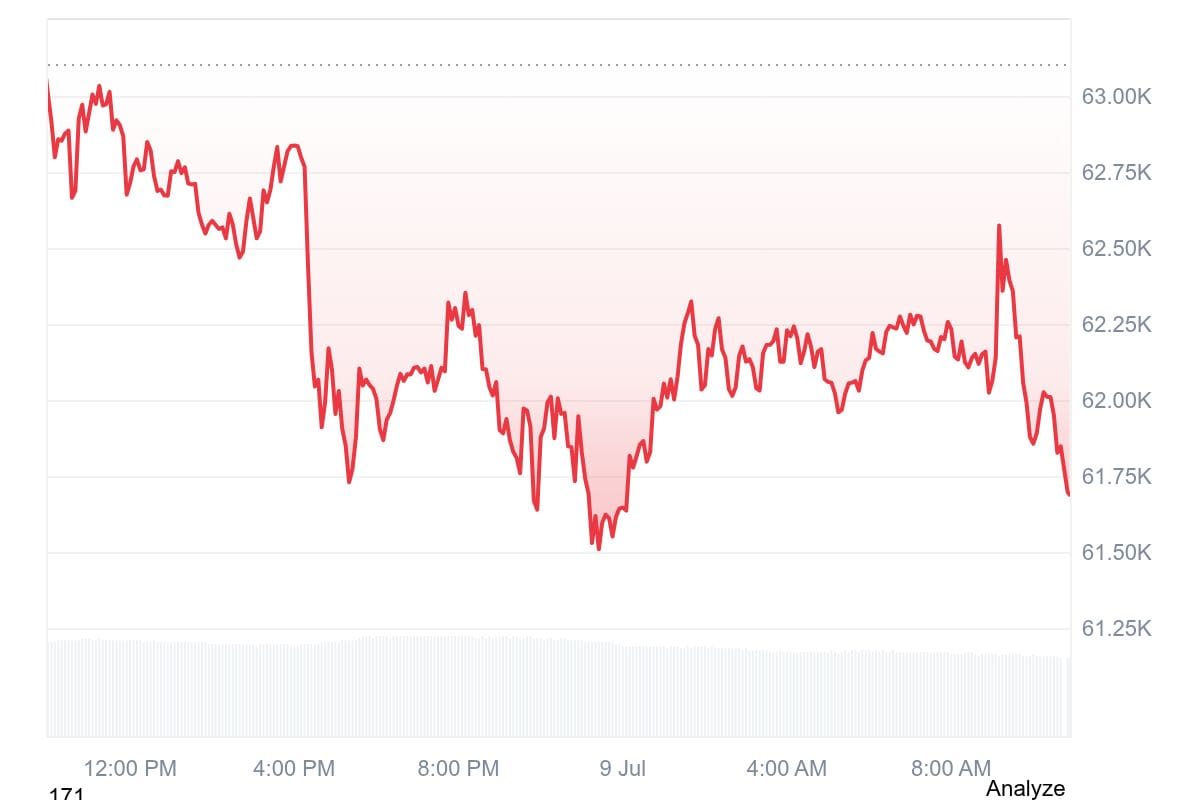
Crypto moved with equities. Not alongside gold, and not differently, at least on the day.
The Strait of Hormuz effect
The Strait of Hormuz is one of the world's most critical energy chokepoints. Disruption there ripples immediately into shipping costs, energy prices, and risk appetite across asset classes. When geopolitical risk spikes in that particular geography, the playbook is consistent: sell risk assets, buy oil, buy gold, compress VIX.
On July 8-9, that playbook played. The VIX climbed to 16.90, up 4.77% – elevated for a market that had been pricing in relative calm. Bitcoin followed the same direction as the S&P 500, which closed -0.28% at 7,482.71, recovering from an intra-day low of 7,425. ETH lost 1.64%, while SOL dropped 2.41% in the past 24 hours.
The stablecoin undercurrent
The price move is only part of the story. Underlying onchain data suggests a structural contraction in stablecoin supply – a measure often read as proxy for dry powder waiting to re-enter crypto.
As CryptoNews reported, reduced buying interest in stablecoins means less capital sitting on the sidelines ready to buy dips. The June price decline coincided with a roughly 20% drop in BTC. The current episode is smaller, but the mechanism is similar: less stablecoin supply signals less conviction that the dip will be bought.
Bitcoin's identity problem, still unresolved
The Iran-driven sell-off is a reminder that the "digital gold" narrative has limits. In a genuine geopolitical shock – energy crisis, dollar collapse, systemic financial event — gold benefits from centuries of institutional framing as a store of value. Bitcoin still trades primarily as a risk asset that happens to have a fixed supply. When the VIX spikes and equities sell off, BTC follows. Whether that changes depends on whether institutions treat it as a risk-off asset in the next crisis, or finally as a hedge.
The answer may come the next time the Strait of Hormuz makes headlines.