


Table of Contents
Bitcoin steadied near $63,000 on Monday morning Singapore time, recovering from a 2026 low of $59,100 hit on June 6, after a brutal week that wiped roughly 13% from BTC's price in seven days. The relief rally, which pushed BTC above $63,500 in early Asian trading, followed a Friday selloff that saw the cryptocurrency fall below $60,000 for the first time since October 2025.
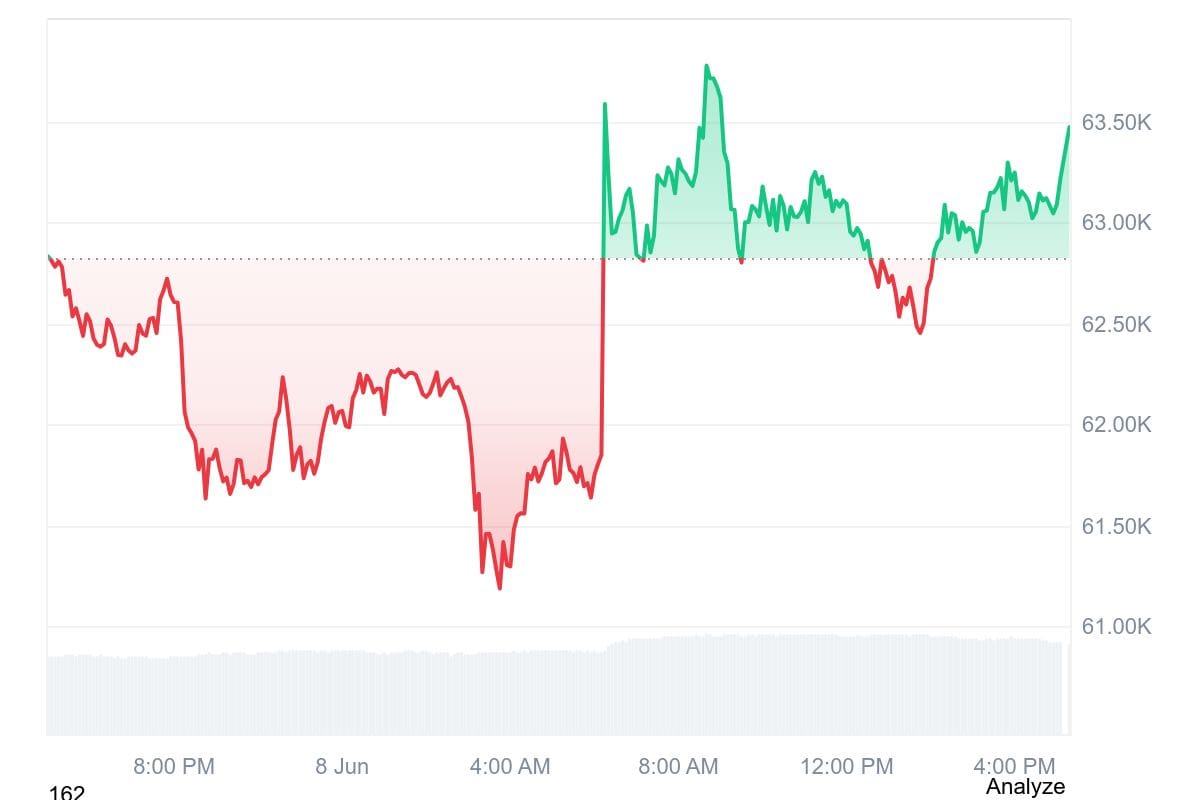
Bitcoin was last fetching around $63,182, up 0.6% over 24 hours but still down 13.4% over the past week. Ether traded at $1,660, up 1.3% in 24 hours and down 16.3% over seven days. Solana held at $65.70, roughly flat over 24 hours but off nearly 19% week-over-week.
The recovery came even as US spot Bitcoin ETFs posted a historic outflow streak. The funds bled $4.33 billion across 13 consecutive trading days through June 3 — one of the longest such streaks on record. Notably, that streak ended with a small net inflow on Thursday, a development traders are watching closely for signs the institutional selling pressure has peaked.
The selloff drivers
The June decline had multiple catalysts. The trigger was a stronger-than-expected US nonfarm payrolls report on June 5 — the biggest jobs beat in 18 months — which effectively killed rate-cut expectations and pushed the dollar higher. Risk assets from stocks to crypto sold off in response. The Nasdaq 100 posted its worst session since Liberation Day. Bitcoin briefly traded below $60,000.
High leverage amplified the move. Over $1.7 billion in crypto positions were liquidated in the 24 hours through Friday, the majority in long positions. The Fear & Greed Index dropped to extreme fear, a sharp reversal from the optimism that drove BTC to new highs above $72,000 in late April.
Adding symbolic weight to the selloff, Strategy (formerly MicroStrategy), the corporate Bitcoin reserve poster child with over 843,000 BTC, executed its first BTC sale in years — 32 coins for approximately $2.5 million to cover preferred stock dividends. The breach of Michael Saylor's "never sell" doctrine rattled market participants already nervous about the scale of ETF redemptions.
Week ahead: CPI June 10, FOMC June 17
The near-term trajectory hinges on this week's US inflation data and the Federal Reserve's next meeting. May CPI drops on June 10; the Fed meets June 17. Futures assign over 95% probability of no rate change at the June meeting, but the CPI print will shape expectations for the second half of the year. A hotter-than-expected reading would further crush rate-cut bets and keep the dollar elevated — a headwind for crypto. A cooler print could provide relief.
On the charts, Bitcoin needs to hold the $62,000-$63,000 support zone to maintain the recovery. Resistance sits at $64,500-$65,000; a sustained close above that range would signal the worst of the selling has passed. Below $60,000, the next meaningful support is around $57,500.
While traditional Bitcoin ETFs bled, a cohort of platform-specific DeFi ETPs attracted institutional interest even during the selloff. Bitwise BHYP, 21Shares THYP, and Grayscale HYPG — all focused on Hyperliquid protocol exposure — collectively drew over $150 million in inflows. The divergence suggests sophisticated capital is rotating from store-of-value crypto into yield-bearing DeFi infrastructure.
Separately, the Senate is pushing to ease bank capital rules for crypto holdings — a long-term regulatory catalyst worth tracking for its potential to open traditional finance doors to Bitcoin.