

Table of Contents
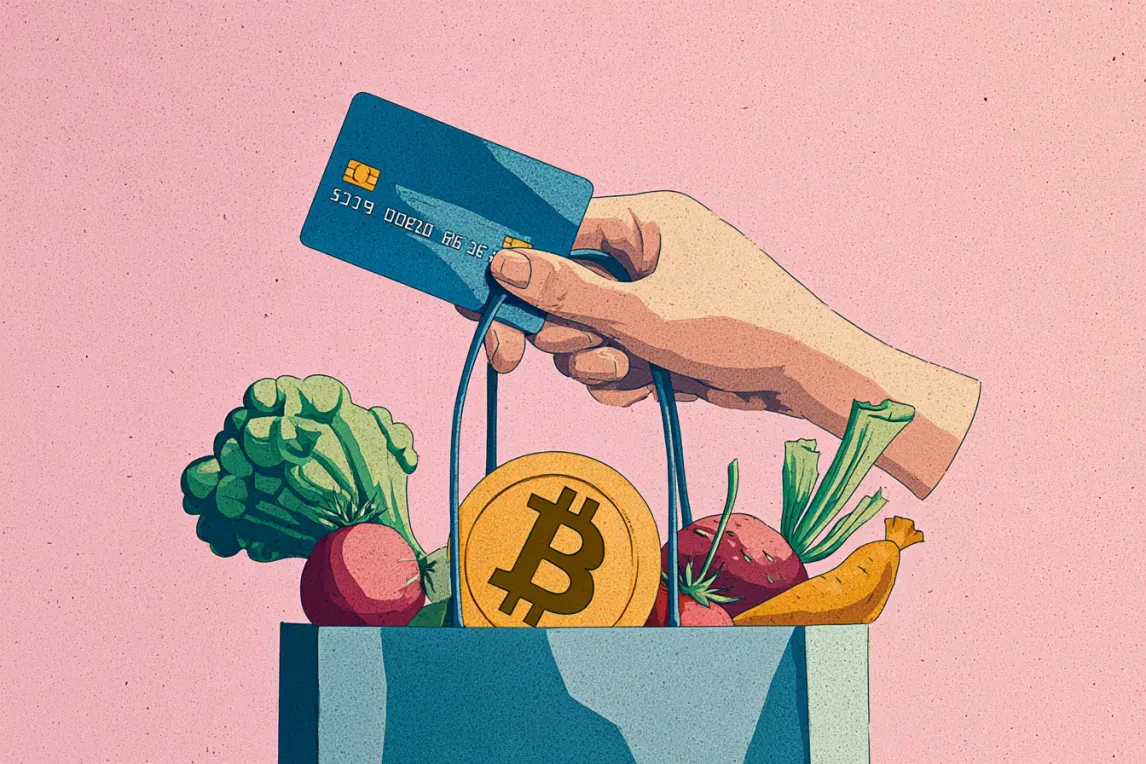
Even if Wall Street is still oblivious, the most covertly revolutionary retail breakthrough since the credit card rewards point is Lolli's automatic Bitcoin payback on linked cards.
There is a certain kind of financial product that can subtly influence your actions.
In the 1980s, it was airline miles cards that accomplished this. In the 1990s, it was launched by the Payback Visa.
The retail industry saw a sea change in the 2000s when Amazon Prime introduced free delivery.
If you're thinking about buying eggs from Lolli, you might be able to use their new automated Bitcoin cashback option, which is available for connected debit and credit cards, to your advantage at checkout.
The premise is almost offensively simple.
Link your existing Visa or Mastercard to Lolli's app. Shop anywhere in their merchant network — which spans groceries, travel, electronics, restaurants, and a growing roster of everyday retailers.
A percentage of every qualifying purchase lands in your Lolli wallet as Bitcoin.
You don't press a button. You don't open the app. You don't even have to remember it exists.
The Satoshis just accumulate.
The most effective dollar-cost averaging approach is the one you establish and then leave to work on its own.
Lolli has transformed the weekly grocery shopping into a consistent purchase of Bitcoin.
Structurally Different?
This stands apart from all the other "earn crypto rewards" offerings that have come and gone since 2017: the ease of use.
Or rather, the total lack of it.
Earlier versions of this concept — BlockFi's card, Gemini's card, Coinbase's card — necessitated that you actively select a crypto rewards card, submit an application, receive approval, keep it on hand, and utilize it in place of the card you instinctively reach for.
The mental and emotional burden was significant, and as a result, the process of adoption came to a standstill.
Lolli's strategy flips the traditional model on its head. Your current card remains with you. You maintain your current practices. The Bitcoin layer operates discreetly, beneath the surface.
Experts in behavioral economics will immediately identify this: it exemplifies a classic "opt-out default" framework utilized for savings in a fluctuating asset.
The brilliance lies in the ability to remain passive. There's no requirement for you to have faith in Bitcoin. You don't need to understand it. It's essential to keep it running without interruption.
The strategy of dollar-cost averaging (DCA) is often overlooked, yet it holds significant value. A method that has quietly beaten nearly all other tactical approaches over major multi-year periods is consistently acquiring fixed amounts of bitcoin at regular intervals, regardless of its price.
The problem is that when markets are bad, even the most self-disciplined people have a tendency to change their strategy. It could be difficult to decide to place a recurring purchase order when the price of Bitcoin falls by 40%. People opt to stop using it.
Lolli's DCA method is radically different from the competition, as it does not simulate spending money on Bitcoin. To some extent, it's like getting your money's worth.
Mental accounting is distinct from physical accounting. You just bought some food. All things considered, the cost of the groceries was $120. The $3.60 you got back is indeed Bitcoin. Since you have already mentally budgeted $120 for spending, the negative consequence doesn't seem real.
Regardless of your original goals, an unanticipated opportunity has materialized in an asset you presently possess – the Bitcoin.
This becomes quite important when looking at broader settings. Approximately $10 trillion worth of credit card purchases are handled annually in the US. An annual passive acquisition of Bitcoin ranging from $5 billion to $15 billion is possible if even 5% of that goes via a Bitcoin cashback system with a return rate of 1-3 percent.
To put that in perspective, given the present rates of Bitcoin manufacturing, that would be enough to last around one to three months. A steady, structural inflow occurs on the demand side of the ledger, and it does so regardless of how people feel about prices.
What Lolli Gets Right?
Lolli has been active in this space since 2018, which feels like a billion years in the cryptocurrency world. They've made it through booms and busts, failed exchanges, regulatory storms, and the massive crypto brand wipeout in 2022 and 2023.
The product's design reflects the developer's wealth of expertise. They made no effort to provide an alternative card. They refrained from launching a bank.
They devised a system of incentives that is undetectable, unobtrusive, and firmly attached to the existing customer structure, much like a barnacle is to an old ship.
The main competitive advantage in this scenario is the merchant network. For a long time, Lolli has worked to secure cashback deals with stores that want to attract consumers but don't want to manage customer loyalty programs themselves.
By automatically attaching cards, merchant connections are able to reach a far wider range of consumers and their buying habits. Lolli used to require users to use their portal or browser extension whenever they shopped in order to get incentives. You can now unlock additional opportunities with your card.
The Risks
This assessment would not be thorough without highlighting the clear fact: Bitcoin remains Bitcoin. The rewards you accumulate now may either diminish significantly or appreciate substantially in the coming months.
Individuals using Lolli who lack this understanding are not true participants in the market – they are merely unintentional holders, a group that has historically shown a tendency to sell in a panic during local downturns.
When Lolli's user base loses faith in the company due to the next big recession, its instructional framework will be tested to the limit. Furthermore, one must take into account the element of regulation.
Each cashback transaction is effectively considered a taxable event since the IRS presently views bitcoin incentives as taxable income upon receipt. Users have substantial and frequently disregarded compliance obligations, despite Lolli's transaction logs being available.
The process of filing taxes can add significant complexity to a system that was easy to use during the acquisition. Neither of these criticisms changes the basic assumption. Think of the asset's features as advantages, not disadvantages, of the product or service.
The Bottom Line
Perhaps the least eye-catching service offered by Lolli is the automated card cashback. No token exists. A yield methodology does not exist. There is no white paper on the subject.
Without needing Americans to make any changes to their way of life, there is a method that is both subtle and persistent that may convert their purchasing habits into Bitcoin accumulation.
Over the years, the orange pill has evolved into many other versions. Political manifestos, audio podcasts, ads for exchange-traded funds, and other similar offerings.
Neither of them has shown such scalability nor such subtlety. Potentially the most potent instrument ever devised for the conversion of Bitcoin might be the debit card that your grandma now possesses.
 Blockhead