


Table of Contents
Argentina, Brazil, and El Salvador have been the hotspots for crypto news recently.
To support local small and medium-sized businesses, El Salvador plans to launch an investment project with $100 million in digital tokens.
At the same time, lawmakers in Brazil are considering a bill to establish a Bitcoin strategic reserve and eliminate cryptocurrency taxes.
Fintech in Argentina, on the other hand, took a hit when lawmakers scrapped a plan to let people pay using digital wallets.
Taken as a whole, these differing tactics show how Latin American governments and businesses are experimenting with new ways of handling reserves, allocating capital, and making money available to everyone, making the region an important arena for the regulation and development of cryptocurrencies.
Argentina Going the Other Way?
Not too long ago, Argentina's fintech industry was in favor of a proposed labor reform that would introduce a new payment method: direct deposit into workers' digital wallets.
It was generally believed that the clause would benefit traditional banking institutions; nevertheless, lawmakers ultimately decided to eliminate it.
During discussions, President Javier Milei's party agreed to remove the section to get broader support for the law, even though studies show that most Argentines want the option to determine where their earnings are deposited.
Was this due to the controversy surrounding the President's meme coin?
No one really knows.
What Does the Law Say?
Traditional banking procedures are legally required to be used for employee remuneration.
The recent setback came after a vigorous campaign by Argentina’s financial institutions, which acted swiftly to thwart the initiative.
Traditional financial groups had been in touch with influential senators to voice their opposition to approving direct payments of wages into digital wallets.
But the complexity of financial services in the country due to the currency's collapse and the dollar shortage is one reason why digital wallets have recently seen a spike in use.
A survey conducted just a few years ago by the central bank showed that just 47% of the population has a bank account.
A deep mistrust of the institution has grown as a result of events such as the "corralito" of 2001, continuous inflation, and repeated restrictions on accessing money from bank accounts.
Many people now utilize financial tech platforms like Mercado Pago, Modo, Ualá, and Lemon as their main way to access formal digital money, greatly expanding their access to financial services.
But the latest law is in direct contrast to the realities on the ground.
En el mundo, las billeteras virtuales se usan principalmente para pagos y, en segundo lugar, para crédito, con una baja incidencia de saldos transaccionales significativos en moneda fiat, que suelen permanecer en cuentas bancarias tradicionales.
— Federico Dominguez (@fededomin) February 10, 2026
Argentina es una excepción: el…
Brazil Embraces Crypto Further
The Brazilian government's stance on Bitcoin may undergo a sea shift after a study was presented to the Economic Development Committee of the Chamber of Deputies.
Taxes on earnings from Bitcoin would be eliminated as part of the plan, which also involves a Sovereign Strategic Bitcoin Reserve (RESBit).
The recent proposal put forth by Congressman Luiz Gastão, who is overseeing Bill 4,501/2024, aims to reshape the regulatory framework of the cryptocurrency sector, incorporating changes to monitoring and reporting standards.
The strategy involves the government gradually acquiring Bitcoin, capping the total at five per cent of the nation's foreign exchange reserves.
The management of the assets will be a collaborative effort between the Central Bank and the Ministry of Finance, ensuring that the latter oversees the secure storage of these assets in cold wallets for optimal safety.
The legislation allows for the use of Bitcoin to settle federal taxes and eliminates a current requirement for brokers and investors to document all Bitcoin transactions.
Bitcoin is seen as a strategic reserve that might improve Brazil's digital currency, the Drex, and it also offers a 100% income-tax exemption on revenues from Bitcoin and other digital assets.
El Salvador Eyes Crypto Tokens to Boost SME Support
El Salvador's small and medium-sized businesses (SMEs) stand to gain $100 million via a strategic alliance between Corporación Infinito and Stakiny this year.
This initiative aims to connect local enterprises with international financial markets through a cohesive framework.
The plan is to combine regulatory adherence, innovation, and financial architecture to utilize compliant tokenized equity instruments.
The technical infrastructure will be supplied by Stakiny, a platform seeking approval from the National Commission on Digital Assets to tokenize shares of private companies.
The approach integrates conventional shareholder agreements with blockchain-recorded digital tokens to enable real-time administration of capitalization tables, dividend distribution, governance events, and secondary trading.
Accessible through a biometric mobile wallet, the platform is built to run on an EVM-compatible network, making tokenized investment accessible to crypto enthusiasts and traditional investors alike.
Blockcast – Licensed to Shill: How Energy & Geopolitics Are Building a Bitcoin-Driven World, ft. Bitcoin Arabia's Lara Eggimann & Jeff Gorman
The Middle East is poised to become a pivotal hub in the global cryptocurrency ecosystem. Countries within the region are increasingly recognizing the strategic importance of integrating blockchain technology into their economic frameworks, energy markets, and geopolitical strategies, according to Lara Eggimann and Jeff Gorman, co-founders of Bitcoin Arabia, a strategic Bitcoin advisory and ecosystem builder that connects the global Bitcoin industry with the Middle East’s most powerful stakeholders.
Thanks for tuning in! If you enjoyed this episode, please like and subscribe to Blockcast on your favorite podcast platforms like Spotify and Apple.
Be at the heart of TradFi–DeFi collaboration at Money20/20 Asia 2026.
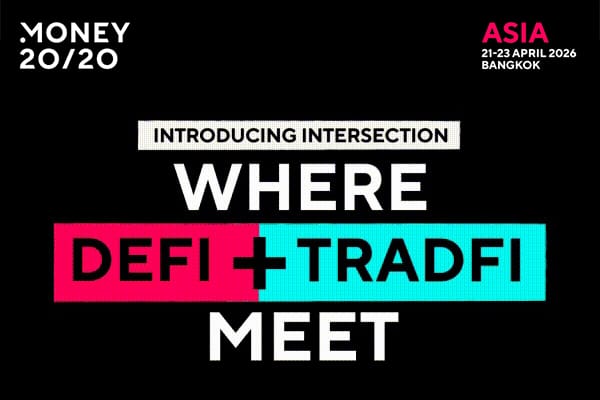
Are you looking to forge partnerships with banks and fintechs? To expand into new markets across Asia, or to secure funding from top-tier investors? This April, the world of digital assets, blockchain, and Web3 converges with the biggest players in APAC’s financial ecosystem at Money20/20 Asia 2026 and its brand new ‘Intersection’ zone, complete with a dedicated content stage, TradFi-Defi innovator showcase, and curated networking spaces. From traditional banking giants to decentralised innovators, private equity leaders, and cutting-edge fintech disruptors, this is where they meet to forge partnerships, spark dialogue, and shape the future of finance.